If you are looking for work now, you have probably noticed a quiet but powerful shift: employers are paying less attention to whether you have a degree and more attention to what you can actually do. At Aptech Staffing, best staffing agency in USA, we are helping candidates land roles by showcasing their skills, portfolios and real-world impact—not their academic credentials. Here is what is changing why it matters for you and how to use it to your advantage.
Why skills are taking stage
The old rule used to be simple: get a degree send out resumes and wait for interviews. Today’s hiring landscape is different. Employers are under pressure to find people who can deliver fast adapt to tools and solve real problems. That means they are looking for proof of ability, not proof of attendance.
Here is why this shift is happening:
- Technology changes fast– New tools and platforms appear constantly. Employers want people who can learn quickly and apply what they learn—skills that no degree guarantees.
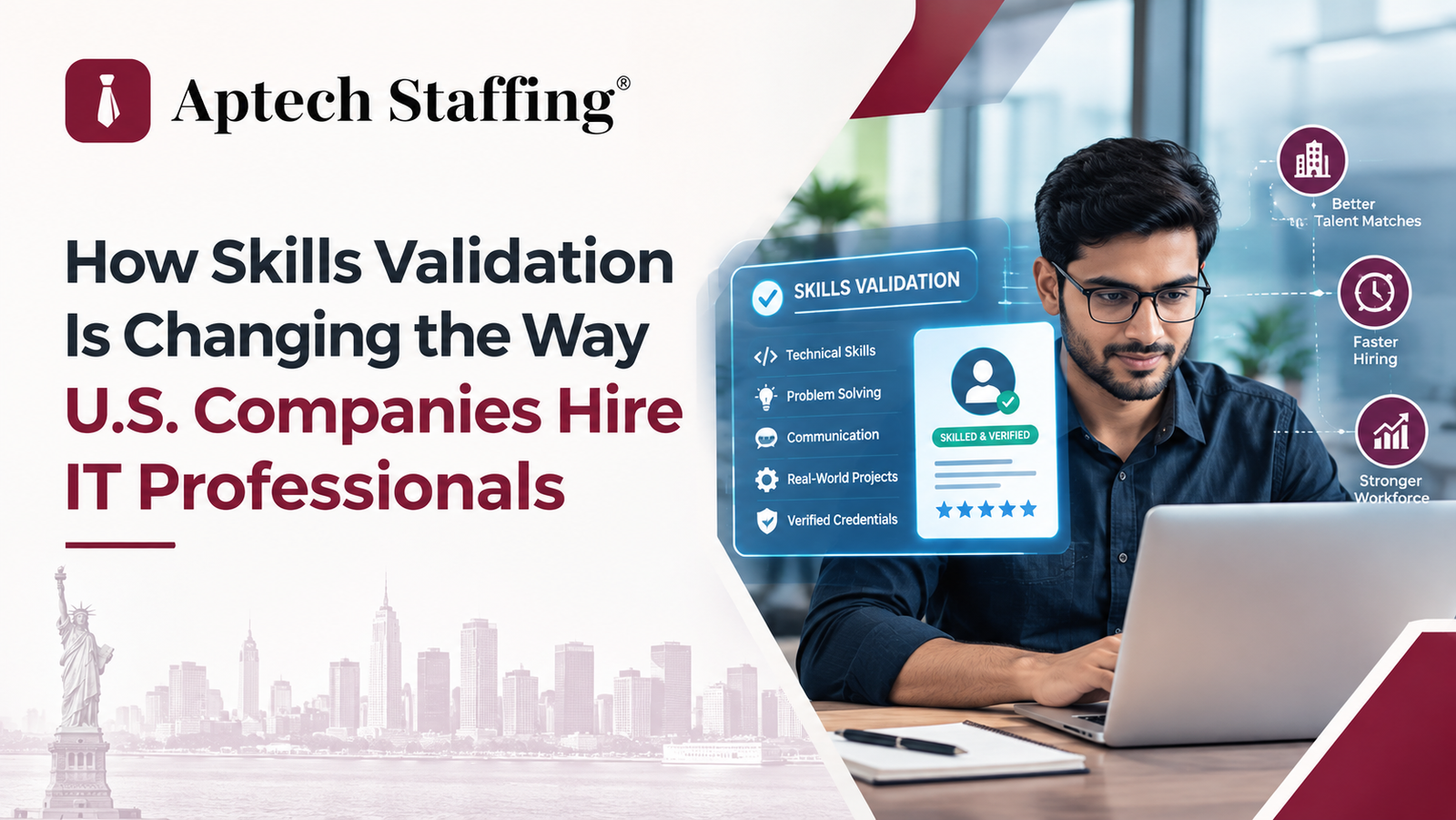
- Skills are measurable– Online assessments, coding platforms and practical tasks let employers test your abilities directly.
- Talent is everywhere– Many great candidates— grads, self-taught developers, career changers—have strong skills without four-year degrees.
- Companies want outcomes– Employers care about results: projects completed metrics improved customers satisfied. A degree does not always predict that.
What this means for you as a job seeker
You do not need to wait for a degree to be competitive. In fields your skills, experience and the way you present them matter more. This is especially true for roles in tech, design, marketing, data, customer success and many operations jobs.
Think about it this way: if you can show you can do the work you will often get the chance—even if your resume does not have the “credentials.
How to stand out in a skills- hiring market
You can take concrete steps to make your skills visible and valuable to employers. Here is a practical playbook:
- Build a portfolio of real work
Showcase projects that prove you can do what the job requires. Examples:
- A GitHub repo with documented code
- A dashboard you built in Excel, SQL or Python
- A campaign you planned. The results it delivered
- A UX case study that walks through your process and outcomes
Make it easy to find. A simple website or LinkedIn profile with links to your work can speak louder than a resume.
- Earn industry-recognized certifications
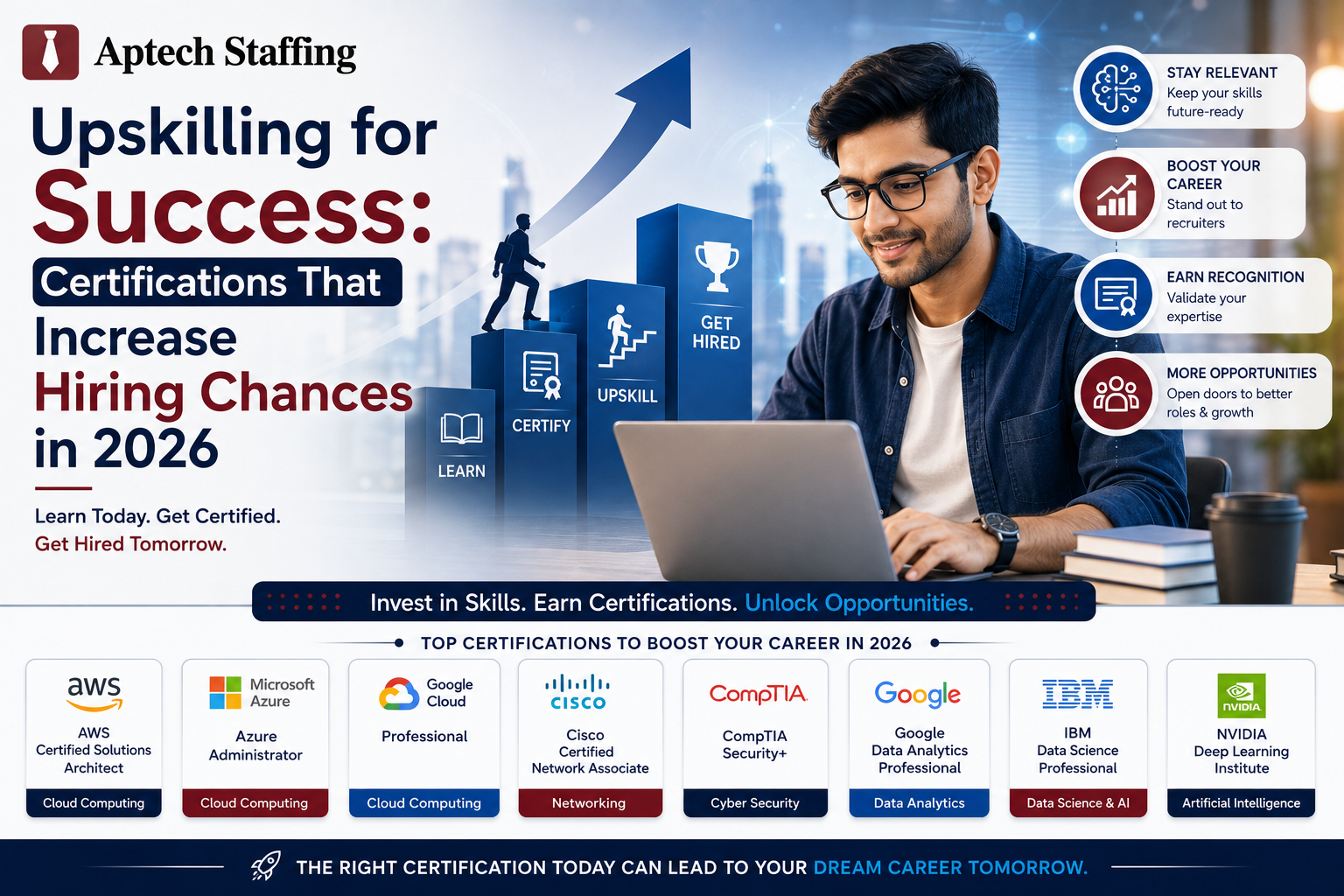
Certifications can validate your skills quickly. Pick ones employers value in your field:
- Cloud: AWS, Azure, Google Cloud
- Data & analytics: Google Data Analytics, Tableau, Snowflake
- Security: CompTIA Security+, CISSP (for roles)
- UX & design: Google UX Design, Adobe certifications
- Marketing: Google Ads, HubSpot, Meta certifications
Now-a-days, courses and micro-credentials count especially when paired with real projects.
- Focus on outcomes not just tasks
When you describe your experience lead with impact:
- “Built a dashboard that reduced reporting time by 40%”
- “Launched a campaign that increased conversions by 25%”
- “Automated a process that saved 10 hours/week”
Numbers, timelines and business impact make your skills credible.
- Keep learning. Show it
Employers want people who can grow. Show you are keeping up:
- Take courses on new tools
- Complete a project using a technology
- Share what you learned on LinkedIn or in a blog post
Learning agility is a skill itself.
- Network and do short-term work
Freelance gigs contract roles and open-source contributions build credibility fast:
- They give you projects to show
- They expand your network
- They often lead to full-time offers
Platforms like LinkedIn, Upwork and niche communities can help you find opportunities.
- Tailor your resume and LinkedIn for skills
of listing every job you have had highlight:
- Core skills for the role
- projects with outcomes
- Certifications and tools you use
Use the same keywords from the job description. This helps you pass automated screening and get noticed by recruiters.
What employers actually look for today
When hiring managers evaluate candidates they are often asking:
- Can you do the work? (hard skills, tools, techniques)
- Can you work well with others? (communication, collaboration)
- Can you handle change? (adaptability, learning speed)
- Can you deliver results? (problem-solving impact)
Degrees can hint at some of these. They do not prove them. Real work, assessments and conversations do.
When degrees still help
This is not a “degrees are story. Degrees still matter in situations:
- Regulated fields: medicine, law, some engineering, teaching
- Roles that require theory: research advanced systems design
- Some companies that still use degrees as a filter
But for many roles—especially in tech, creative, sales and operations—skills and experience are the main gatekeepers.
How Aptech Staffing helps job seekers
We do not just match resumes to job descriptions. We help you present your skills in ways that get you hired.
- Skills-focused resume coaching: We reshape your resume to highlight outcomes, projects and tools—not titles.
- Portfolio guidance: We show you what to include and how to format it so employers see your value quickly.
- Certification advice: We recommend the certifications that matter most for your target roles.
- Interview prep: We train you to talk about your work show your thinking and demonstrate problem-solving.
- Access to opportunity: We connect you with employers who use skills-based hiring and are open to -traditional backgrounds.
Our goal is to make you competitive, visible and confident—no your educational path.
Quick wins you can do this week
If you want to start moving today, try these:
- Create or update a portfolio with 2–3 projects
- Add 1–2 relevant certifications to your LinkedIn
- Rewrite your resume’s section to focus on skills and outcomes
- Send 5 tailored applications that match your core skills
- Post one update, about what you are learning or building
Small steps compound. The more you show your skills the more opportunities you will attract.
A final thought
You do not need to wait for the “right” degree to get the job. The market is opening up for people who can prove they can do the work. If you are willing to build, learn and show your impact employers will notice.
At Aptech Staffing, best staffing agency in USA, we are here to help you get seen get selected and get hired based on what you can do—not where you studied.
Ready to take the step? Share your target role. We will help you map out the skills, projects and certifications that will make you stand out.