The craze for IT role has been broken for quite some time. For years, companies have used a stack of resumes, some basic algorithms that focus on keywords and a 45-minute conversation to determine whether a candidate has what it takes to do the job. However, in the world of technology, concepts and coding can be two different things.
It’s a common thing we’ve all seen happen. The candidate appears to be in ideal form on paper. They went the extra mile and they have the certifications, they have the fancy degree and they interview like a dream. Things start to crack after 3 months in the position. They may not be able to debug an existing system, can’t grasp the nuances of your team’s cloud architecture or just lack the hands-on problem solving skills needed for the job.
This is where skills validation comes in. Probably the biggest change in hiring since the LinkedIn profile. For all of us in the trenches, such as the team for Aptech Staffing, best staffing agency in USA, it is a welcome shift that’s putting employers and job seekers on the same page.
Emotional intelligence and innovation: Moving beyond the “Paper Tiger”
The resume has been queen for many years. However, a resume is a marketing document and NOT a true reflection of one’s ability. Applicants include all technologies that they’ve ever interacted with, sometimes exaggerating their experience to circumvent the Applicant Tracking System (ATS).
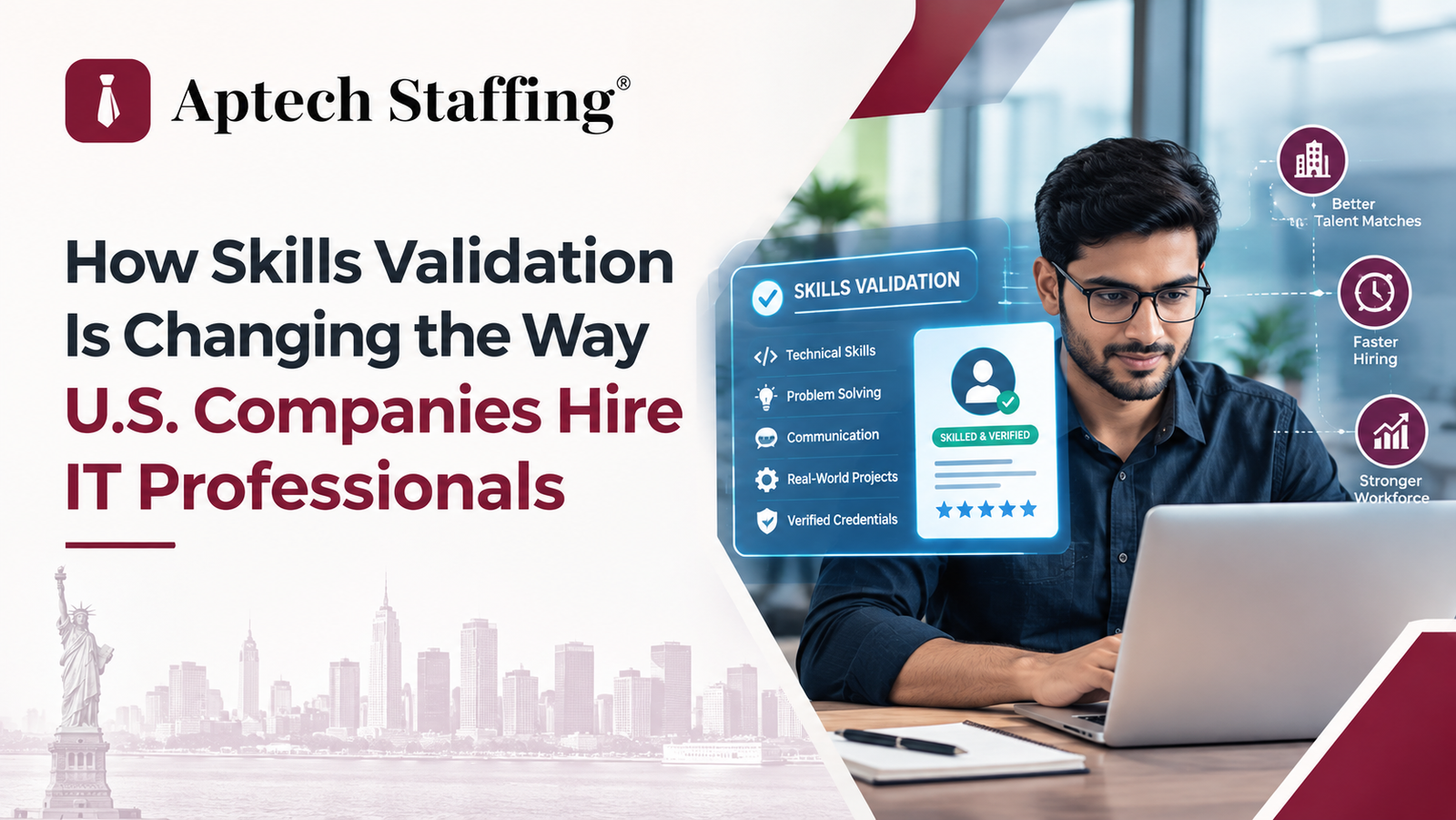
Skills validation turns it on its head. Rather than saying what he knows, he’s saying what he can do for- look, show me what you can do.
In the IT industry, this transition is especially important because IT technologies revolve every 6 months. A developer who used to be “the master of AngularJS” five years ago may no longer be employable today if he haven’t modernized to the latest frameworks. When the person sitting in the interview chair is to be validated, the person should have the skills that are relevant to the job and current vacancy.
The impact on U.S. Hiring Managers
The expense for a poor hire to a U.S. company is phenomenal. This isn’t simply the cost of the salary; it’s the cost of hiring, training, affecting team morale and lost productivity. For this reason, the top IT staffing companies in USA are making a significant shift towards validated assessments.
The conventional interview cycle is not sufficient anymore for companies. They are demanding:
- Live Coding Challenges: Problem Solving in Real Time (not on a whiteboard).
- Take-Home Projects: In-depth studies on real design issues.
- Scenario Based Simulations: demonstrating a candidate’s response to a server failure or security incident.
The advantage of this is that the chances of hiring a “professional interviewee” (someone who can talk up a job but can’t do it) are minimized.
What this means for the Contingent Workforce
The movement is towards skills validation is taking a huge toll on the contract and temporary sector. If you have a full-time employee, you will allow more time for ramping up. If you hire a contractor, however, you want him to get busy on the first day.
Here is where the function of venerated partners is extremely important. The top USA IT recruiting firms have gotten accustomed to changing. Being just matchmakers and sending a resume and hoping for a response is no longer an effective approach. We have to be validators.
At Aptech Staffing, we see skills validation as a safeguard for our clients. We pre-qualify candidates to make sure we are not only filling jobs- we are delivering solutions. This is beneficial for establishing trust, but will also shorten the hiring process. With a client who has been informed, a candidate has already passed the technical validation test, the interview process focuses more on the client’s culture, rather than whether or not they can do coding.
The Candidate Experience: A Fairer Fight?
You’d expect candidates to abhor this additional testing. In contrast, the answer is often “no“. Good developer, engineer and IT pros want their abilities measured, not how they schmooze.
The old system was laboring for those who are talented and put-their-palsy-in-petticoats or who are introverts or uncomfortable with typical social interview processes. Skills validation creates a level playing field. It makes it possible for the self-made genius to go up against a candidate who has a master’s degree from an Ivy League school. It makes a meritocracy.
In addition, it eliminates the aggravation of the “black hole” application system. A candidate can take a validated skills assessment and get immediate feedback on their technical abilities. If they don’t land the role, they receive a standard. The transparency is a welcome freshness in a sometimes murky business.
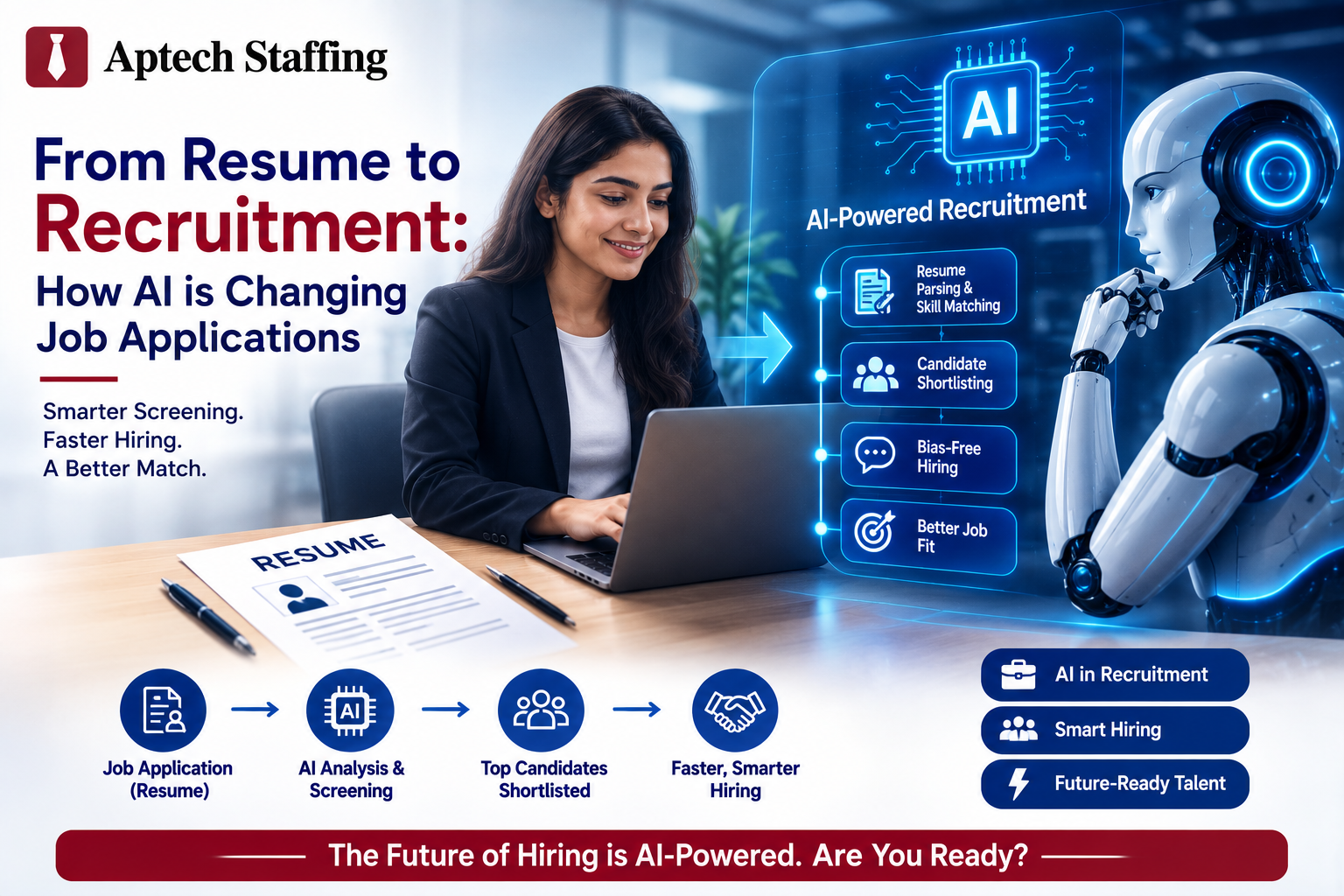
The Role of AI and Automation
We can’t talk about skills validation without mentioning technology. Now, AI can be used to read the code, understand its complexity and even guess how a developer will act or behave in a team.
Technology is a tool, though and not a replacement for human judgment. The top IT staffing agencies in USA utilize AI to filter through thousands of applicants, but then they have to do the final validation using human experts. A senior engineer should not be evaluated by AI, but by another senior engineer. But a human touch is required to see the finer points a machine may overlook.
Such a combination of machines and humans is the benchmark for modern-day IT recruitment.
Why use a Validator?
Don’t lower your standards if you are a U.S. business looking to fill IT jobs or if you are sick of receiving unqualified resumes. The answer is to change your process.
A tie-up with the best USA IT staffing agencies that value skills validation is the most efficient approach to obtain your desired talent. These agencies know how to cut through the chatter and have the tools, technical people and the infrastructure.
We at Aptech Staffing, best staffing agency in USA, embrace this new approach to hiring. It’s not just going back and reviewing where they’ve worked, it’s about what they can do today. Through skill validation we aim to strengthen and align U.S. companies to more agile teams that can face challenges of the future.
The resume is dead. May the skill live forever.
Frequently Asked Questions (FAQs)
What does skills validation mean in IT hiring?
Skills validation is a process of objectively assessing a candidate’s technical skills prior to hiring. To ensure that the candidate is truly capable of the job, it employs practical evaluations such as real-life scenario simulations and live coding challenges in addition to resumes and conversational interviews.
Why are U.S. companies turning to skills-based hiring for IT positions?
The price of a bad hire of IT is enormous. By having current, relevant and practical skills, skills validation can minimize that risk. In an industry that is changing so quickly, it’s the only option you have to ensure that whenever you hire someone, they can immediately start benefiting your company.
What are the advantages of skills validation for people seeking IT jobs?
It establishes a fair and merit-based hiring procedure. Self-taught developers, among other talented individuals, can make their mark just by their skill and not their lineage. It also gives clear feedback and enables qualified candidates to stand out quicker.
How do the best IT staffing agencies in USA contribute to skills validation?
Top USA IT Staffing Services, such as Aptech Staffing, serve as the connecting link between employers and the candidates that they seek. We thoroughly evaluate technical skills prior to showcasing to our clients, so that our client will deal with a pre-vetted professional who’s ready for the job.
How is skills validation changing the future of IT recruiting?
It is shifting the paradigm from a resume-only-to-hire approach to a competency-based approach to recruiting IT. Verified digital badges and micro-credentials will be increasingly used to replace the vague, all-purpose statements that appear on resumes, which will speed up the hiring process, provide more accurate hiring information and create a more fair hiring environment for both employers and employees.